Ask about "BART access" in a Pittsburg listing and you'll usually get a number of minutes, not a number of feet. Five minutes to the station. Ten if there's traffic on Highway 4. That framing does a lot of work, because in Pittsburg the neighborhoods that lean hardest on BART proximity in their marketing copy are the ones you're most likely to drive to it from.
That's the opposite of what most buyers expect walking into this market. The assumption is straightforward: closer to a train station means a real premium, because commuters will pay for time. In Pittsburg, the pattern runs the other way. The homes you can actually walk to a station from are the cheapest in the city. The homes that cost the most sit in hillside subdivisions where getting to either station means getting in a car first.
Two stations, two different jobs
Pittsburg has had BART service since December 7, 1996, when the Pittsburg/Bay Point station opened as the eastern terminus of the heavy-rail Yellow Line. That station still does the heavy lifting for daily commuters, connecting to San Francisco and Oakland on standard BART trains.
The second station, Pittsburg Center, didn't open until May 26, 2018, as part of the $525 million BART to Antioch extension, known locally as eBART. That project was bundled with a roughly $1 billion corridor investment that also widened Highway 4 from four to eight lanes between Pittsburg and Antioch. The city built its own plan around the new station too. The Railroad Avenue Specific Plan calls for concentrated development and better pedestrian connections within a half-mile radius of Pittsburg Center, and in 2020 the city broke ground on The Atchison, a 202-unit mixed-use project with roughly 13,000 square feet of ground-floor retail, positioned as the first piece of that vision less than half a mile from the platform.
On paper, Pittsburg Center is the newer, better-connected, city-championed station. In practice, it isn't behaving that way.
The ridership number that undercuts the story
As of November 2025, Pittsburg Center was the second-least-used station in the entire BART system, with 540 daily boardings. That's not a soft year for one line. That's a station built with public money, wrapped in a specific redevelopment plan, sitting near the bottom of ridership for the whole network.
Part of the reason is structural. The eBART line runs on diesel railcars that are mechanically separate from the rest of the system, so anyone riding from Pittsburg Center toward San Francisco has to make a cross-platform transfer at Pittsburg/Bay Point before reaching a standard BART train. That transfer adds a few minutes to every trip. Part of the reason is also that the station itself is minimal. It has no restrooms, according to BART's own station page, with the nearest ones back at Pittsburg/Bay Point or down the line at Antioch. It doesn't offer bike lockers.
Parking tells the same story. There's no lot directly at Pittsburg Center. Riders use a separate 240-stall lot about a quarter mile away on Bliss Avenue, and that lot is daily fee only, first come first served, with no permit section at all. Compare that to Antioch station, one stop further out, which has 1,006 stalls and an actual permit program. If you're commuting five days a week and want a guaranteed spot, Pittsburg Center isn't built for that.
Even BART's own 2024 planning documents acknowledge the mismatch. The agency's transit-oriented development work plan flagged what it called significant market, local support, and implementation barriers standing in the way of redeveloping the surface parking lots around the station, and pushed any realistic timeline for that development into at least the mid-2030s. The plan that was supposed to fill in around this station hasn't caught up to the station itself.
What that means for home prices
This is where the pricing inversion shows up. The neighborhoods built to be genuinely walkable to a station are also the oldest and the cheapest. Downtown and Old Town Pittsburg, where the housing stock includes century-old homes with original hardwood floors, sit within a real walk of Pittsburg Center. Over the three months ending in April 2026, the median sale price in Downtown Pittsburg was $599,000, at $319 per square foot.
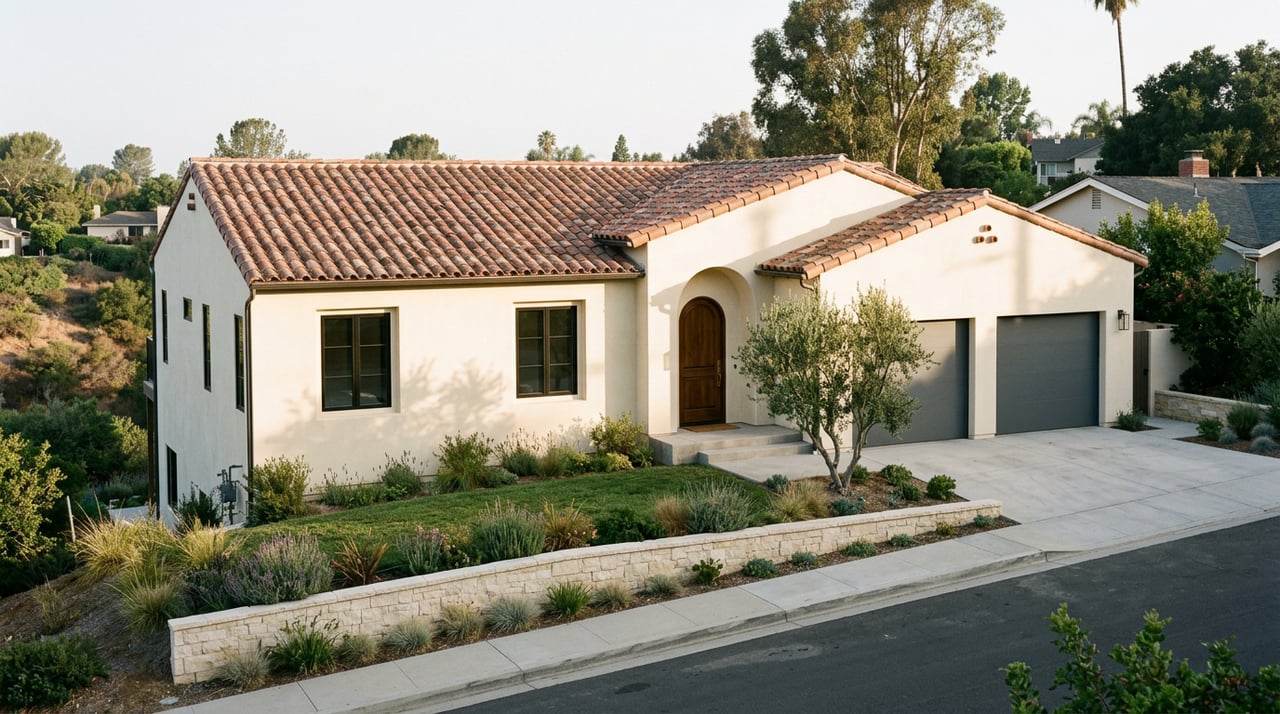
Meanwhile the neighborhoods commanding the highest prices in the city are the ones furthest from either platform on foot. San Marco, up in the hills with two- and three-car garages and a Mediterranean architectural style, has run a median sale price close to $800,000 over the trailing twelve months. One recent listing for a home in the neighborhood's Toscana section describes the location as just minutes from Highway 4 and BART, which is accurate if you're counting driving minutes. Just up the hill in Vista Del Mar, a newer master-planned community built around Delta views rather than a train platform, formal walkability data rates the area as very car-dependent with only minimal transit options.
Citywide, the August 2026 snapshot of active listings put Pittsburg's median list price at $599,000, down about 4 percent from a year earlier. That single number flattens what's actually happening underneath it. Downtown is pricing right at the citywide median while offering the one thing this market's transit story was supposed to deliver: a walk to the train. San Marco is pricing well above that median while requiring the same drive-and-park routine as anywhere else on Highway 4.
None of this makes the hillside neighborhoods a bad buy. Newer construction, bigger garages, and a view of the Delta are real value, and buyers are entitled to pay for them. The problem is treating "near BART" as if it's part of that value. In San Marco and Vista Del Mar, it mostly isn't. You're paying for the house, not the commute.
What this changes if you're shopping Pittsburg
If getting to San Francisco or Oakland without a car is actually part of your decision, a few things are worth checking before you fall for the phrase "near BART" in a listing:
- Walk it, don't drive it. A neighborhood five minutes away by car can be a twenty-minute walk with no sidewalk for half of it. Downtown and Old Town are the only Pittsburg neighborhoods where a genuine walk to a platform is realistic for most addresses.
- Understand which station you'd actually use. Pittsburg/Bay Point puts you on standard BART with a direct ride toward Oakland and San Francisco. Pittsburg Center puts you on eBART first, with a transfer added to every trip.
- Don't assume parking will be there. If you'd be driving to Pittsburg Center, the lot is a quarter mile from the platform, fee only, and offers no permit option. There's no guaranteed spot the way there is at some other stations on the line.
- Price the trade-off honestly. A hillside home in San Marco or Vista Del Mar is buying you size, newer construction, and a view. It is not buying you a shorter commute over a home in Downtown Pittsburg unless you're driving to the station either way.
We wrote separately about why century-old homes in Old Town price the way they do once insurance and financing costs get factored in, and that piece and this one are really two sides of the same neighborhood. Old Town's price sits low partly because of age-related friction on the house itself. It also sits low despite being the one part of the city that delivers the actual thing BART access is supposed to mean.
FAQ
Is Pittsburg/Bay Point or Pittsburg Center the better station for a daily commuter? For a standard commute into San Francisco or Oakland, Pittsburg/Bay Point is the more direct option since it runs on the main BART line rather than requiring a transfer. Pittsburg Center is more useful if your daily trip starts or ends further east along the eBART corridor.
Will the area around Pittsburg Center eventually get denser and more walkable? The city's Railroad Avenue Specific Plan and projects like The Atchison point in that direction, but BART's own 2024 planning documents put any redevelopment of the station's surface lots at least a decade out, into the mid-2030s at the earliest.
Should I trust "near BART" in a Pittsburg listing? Treat it as a driving-distance claim unless the listing specifies a walking distance or the address is in Downtown or Old Town. In the hillside neighborhoods, "near BART" and "walkable to BART" are not the same thing.
If you're weighing a Pittsburg neighborhood against what it will actually cost you in commute time, not just square footage, that's exactly the kind of local read our team spends its time on. The Lucas Group would love to walk through the specifics with you. Get in Touch.